
"NSX" is an acronym for "New Sportscar eXperimental" when it was presented (as NS-X) at the Chicago Auto Show in February 1989 and at the Tokyo Motor Show in October 1989. Internal Honda sources say the X initially stood for unknown in the codename of the car while it was in development.
// Extracted from Wikipedia (see full text clicking here)//
Video:
Mostrando entradas con la etiqueta Sportive Cars. Mostrar todas las entradas
Mostrando entradas con la etiqueta Sportive Cars. Mostrar todas las entradas
sábado, 27 de enero de 2007
Honda Acura NSX


martes, 9 de enero de 2007
Jaguar C-XF

The previous generations of Jaguar cars were notably "retro" in design, being heavily influenced by styling cues from classic Jaguars from the 1960's. The C-XF represents a departure from that design strategy. Although the C-XF has four doors, its shape is very much that of a coupé, following a design trend started by the already super-successful Mercedes-Benz CLS. Jaguar knows this approach will limit the potential market for the car — but that’s all part of the plan. The latest thinking within Jaguar is that its current woes are down to an overly ambitious, poorly conceived and executed plan to turn Jaguar into a large-volume rival for BMW, Mercedes and Audi. So now, instead of building 1m cars a year, it will deliberately aim to construct less than a tenth of that number, turning Jaguar into an exclusive, low-volume manufacturer of high-quality premium sporting cars.
// Extracted from Wikipedia (see full text clicking here)//
Video:
And a C-XF design insight:
viernes, 29 de diciembre de 2006
Laraki Fulgura

The Laraki Fulgura was the company's first attempt at a sportscar. Originally unveiled as a concept at the 2002 Geneva Motor Show, the production version debuted a year later at the same show. A slightly redesigned version of the bodywork was unveiled in 2005.
The car is known by its luxurious design. Based on the frame and mechanicals of a Lamborghini Diablo, the Fulgura receives a quad-turbo Mercedes-Benz 6.0L V12 producing 680hp, attached to a 6-speed manual transmission. A new aerodynamic carbon fibre body is also added. This brings the Fulgura to an estimated price of $555,750.
Performance for the Fulgura is an estimated top speed of 217mph (350km/h) and acceleration of 0 - 60mph in 4.5 seconds.
// Extracted from Wikipedia (see full text clicking here)//
Video:
jueves, 28 de diciembre de 2006
Cadillac Cien

The Cien was designed at General Motors' Advanced Design Studio in England and built as a fully-working road-going vehicle with the help of the UK-based engineering and motorsport company Prodrive. The Cien's low, sleek style was inspired by the F-22 Raptor.
The car was featured prominently in the 2005 film, The Island, directed by Michael Bay.
// Extracted from Wikipedia (see full text clicking here)//
Video:
Isdera Erator GT

The company was founded in 1969 by Eberhard Schulz, and its first vehicle, the Isdera Erator GTE, was built in 1970.
An estimated 70 cars have been sold by Isdera since 1983. Projects since 1993 have been kept top secret by Isdera. The company’s most recent automotive ventures and sales figures have not been released to the general public.
// Extracted from Wikipedia (see full text clicking here)//
Video:
Vector W2
The Vector W2 is a concept car created by Vector Supercars in 1980. It has a twin-turbocharged 350cid Chevrolet V8 engine that produced over 600 hp (450 kW) of power and over 800 N·m (600 ft·lbf) of torque. The top speed was a claimed 320 km/h (200 mph).
The name supposedly comes from the "W" for Jerry Wiegert (designer and founder of Vector) and 2 for the amount of turbos. Even though this car was a prototype, the car was repainted and facelifted over time giving the impression that many were made. Between 1972 and 1987, Wiegert attempted to raise the money to start production of his car. In its lifetime the car has covered over 100,000 miles in testing, more than any other sports car. In 1989 a modified version of the W2 went in production as the Vector W8.
Currently, the Vector W2 prototype is owned by Wiegert. The car is currently dismantled, and stored alongside other Vector equipment in the current Vector headquarters in Wilmington, California.
// Extracted from Wikipedia (see full text clicking here)//
Video:

miércoles, 20 de diciembre de 2006
Nissan 300 ZX

The Z32 300ZX Turbo was on Car and Driver magazine's annual Ten Best list every year it was available, from 1990 through 1996. The Z32 Turbo was also Motor Trend's Import Car of the Year for 1990. It was critically acclaimed by many magazines as being a complete turnaround from the Z31, which many critics felt was a sloppy-handling GT, far from the agile, sporty 240Z of years past. From the year it was introduced, it won many comparison tests against similar sports cars such as the Mitsubishi 3000GT/Dodge Stealth and the Mazda RX-7, as well as the Chevrolet Corvette, Ford Thunderbird, Toyota Supra and the Porsche 968. In some comparison tests for the prototype 1991 Dodge Stealth R/T Twin Turbo, the Stealth came out on top.
The Z32 300ZX also made it to Automobile Magazine's list of 25 Most Beautiful Cars in August 2006 and 20 Greatest Cars in April 2006.
// Extracted from Wikipedia (see full text clicking here)//
Video:
domingo, 17 de diciembre de 2006
Callaway C16 (2006)

This allowed Reeves to become familiar with the BMW 3 Series. He obtained one of the BMW 320i school cars with the intention of tuning it for more power. Reeves went on to install a turbocharger to the BMW. It wasn't long after that (via word of mouth and some media articles) that orders started pouring in, giving birth to the Callaway company.
// Extracted from Wikipedia (see full text clicking here)//
Video:
Shelby Mustang GT500

The program was factory-sponsored and production was eventually moved in-house. The spirit of the series continues today in the special Mustang Cobra models.
// Extracted from Wikipedia (see full text clicking here)//
Video:
viernes, 15 de diciembre de 2006
Aston Martin Vantage

Visual cues include a unique 2-headlight front clip with DB6-like grille. It was also the last Aston Martin to come equipped with wire wheels. Just 70 examples were built.
The Vantage was the last straight-6 Aston Martin until the 1993 DB7.
// Extracted from Wikipedia (see full text clicking here)//
Video:
Jaguar XJ220

It held the record for the highest top speed of a production car (350 km/h, 217 mph) until the arrival of the McLaren F1 in 1994.
In 1992 at the Nardò Ring, Martin Brundle pushed a XJ220 to 217.1 mph. However to achieve this speed, the catalytic converters were disconnected and the rev limiter was increased from 7200 rpm to 7900 rpm.
// Extracted from Wikipedia (see full text clicking here)//
Video:
... and more images about this car:
jueves, 14 de diciembre de 2006
Lotus Sprit

It is held to be among the first of designer Giorgetto Giugiaro's "folded paper" designs. Originally, the name Kiwi was proposed, but in keeping with the E naming format of Lotus tradition, the name was changed to Esprit.
Historically it was able to match or better most of its contemporary rivals' performance in many areas, which included the Ferrari 308, 328, F355, and 360 Modena, as well as many Porsche sports cars in a production life that lasted nearly 30 years.
// Extracted from Wikipedia (see full text clicking here)//
Video:
Porsche 911
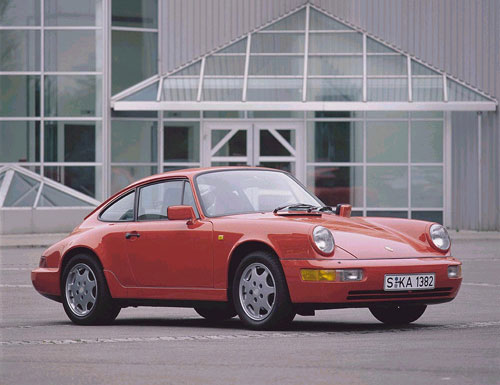
Since its inception the 911 has been modified, both by private teams and the factory itself, for racing, rallying and other types of automotive competition. It is often cited as the most successful competition car ever, especially when its variations are included, mainly the powerful 935.
In the international poll for the award of the world's most influential car of the twentieth century the 911 came fifth after the Ford Model T, the Mini, the Citroën DS and the Volkswagen Beetle. It is the most successful surviving application of the air (or water) cooled opposed rear engine layout pioneered by its original ancestor, the Volkswagen Beetle.
// Extracted from Wikipedia (see full text clicking here)//
Video:
BMW M6

It can be visually distinguished from the 630i, 645Ci and 650i by its deeper front valance with air intakes, more contoured side sills and a rear valance with diffuser as well as four tail pipes.
// Extracted from Wikipedia (see full text clicking here)//
Video:
BMW M5 (E60)
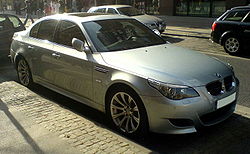
The first M5, based on the E28 5-Series, made its debut at the 1984 Amsterdam Motor Show. It was the product of demand for an automobile with the carrying capacity of a saloon (sedan), but the overall performance of a sports car.
The E60 M5 was introduced in 2006. It has a naturally aspirated 5.0 L BMW V10 S85 engine redlining at 8250 RPM and developing a peak output of 500 SAE hp.
// Extracted from Wikipedia (see full text clicking here)//
Video:
miércoles, 13 de diciembre de 2006
Maserati Bora

Shortly after Citroën took a controlling interest in Maserati in 1968, the concept of a mid-engined two-seat supercar was proposed. Lamborghini and De Tomaso already had the Miura and Mangusta whilst Ferrari were known to be developing their own mid-engined contender. The Maserati project got underway in October 1968 and a prototype was on the road by the summer of 1969. Shown in its final form at the Geneva Salon in March 1971, the first customer cars had been delivered before the end of the year.
With its uncluttered lines, the Bora was a stunner for sure, but its hefty side profile meant it looked chunkier than the Lamborghini Countach and Ferrari 512BBi. Standing 1138 mm high, perhaps the most distinctive details were the brushed stainless steel roof and windscreen pillars. Inside, the bucket seats, dash, door trim, centre console and rear bulkhead were trimmed in leather, electric windows having been standard, most cars also getting air-con.
Maserati struggled after being bought by De Tomaso in 1975, and the Bora was discontinued in 1980. The Bora had a twin, the Merak, which used the same bodyshell and a smaller Maserati V6 engine, also used in the Citroën SM.
// Extracted from Wikipedia (see full text clicking here)//
Video:
Porsche 928

The 928 was sometimes called either shark or land shark, due both to its shark-like appearance and its ability to "eat up" large segments of road in very little time. Porsche's marketing slogan "It's about as fast as you can go without having to eat airline food" or "It is as fast as you can go without hiring a flight attendant" from the late 1980s where at one point it was the fastest production road-car in the world, having been recorded at 172mph on the salt flats in Utah in 1986 using an early 928 S4. [1] This particular car was originally white but was sprayed bright red for the record attempt to make it stand out more against the salt in marketing material like videos and posters.
// Extracted from Wikipedia (see full text clicking here)//
Video:
... and a 928 promotional footage:
domingo, 10 de diciembre de 2006
Mercedes SL55 AMG

As the new millennium approached, the SL was a decade old and customers were turning to more modern cars like the Jaguar XK8.
In 2001, an all-new SL (initially just a 5.0 L SL500 version) went on sale, boasting the "Vario-Roof", an electric folding steel roof which had been seen on the smaller, cheaper SLK in 1997. A 5.0 L 302 hp (225 kW) V8 was optional, with a 5.5 L AMG V8 appearing in 2004's SL55 AMG. V12 engines are available in the SL600 and the limited-production SL65 AMG.
// Extracted from Wikipedia (see full text clicking here)//
Video:
miércoles, 6 de diciembre de 2006
Ford Capri Zakspeed Turbo

During this period, the Zakspeed team achieved a number of victories including the overall championship in 1981 with driver Klaus Ludwig (car shown right).
In the early 1980s, Zakspeed also prepared a Mustang for Ford USA's Special Vehicle Operations to race in the domestic IMSA series. The Mustang chassis was based on the Group 5 Capri.
// Extracted from Wikipedia (see full text clicking here)//
Video:
TVR Tuscan

The mark II Tuscan is the latest evolution of this legendary TVR. Stunning new lightweight composite bodywork. Luxurious new leather interior. Sophisticated new handling set-up. Same earth-shaking power-to-weight ratio.
Clothing one of the most substantial rollcages and chassis in the industry, the new bodywork has been designed to provide downforce for high-speed stability as well as head-turning looks. The new interior cossets its two occupants in seats trimmed in the finest hides, while there is room in the cavernous boot for two sets of golf clubs and luggage, even with the targa roof stowed.
// Extracted from TVR official website (see full text clicking here)//
Video:
Suscribirse a:
Entradas (Atom)